 Image 1 of 2
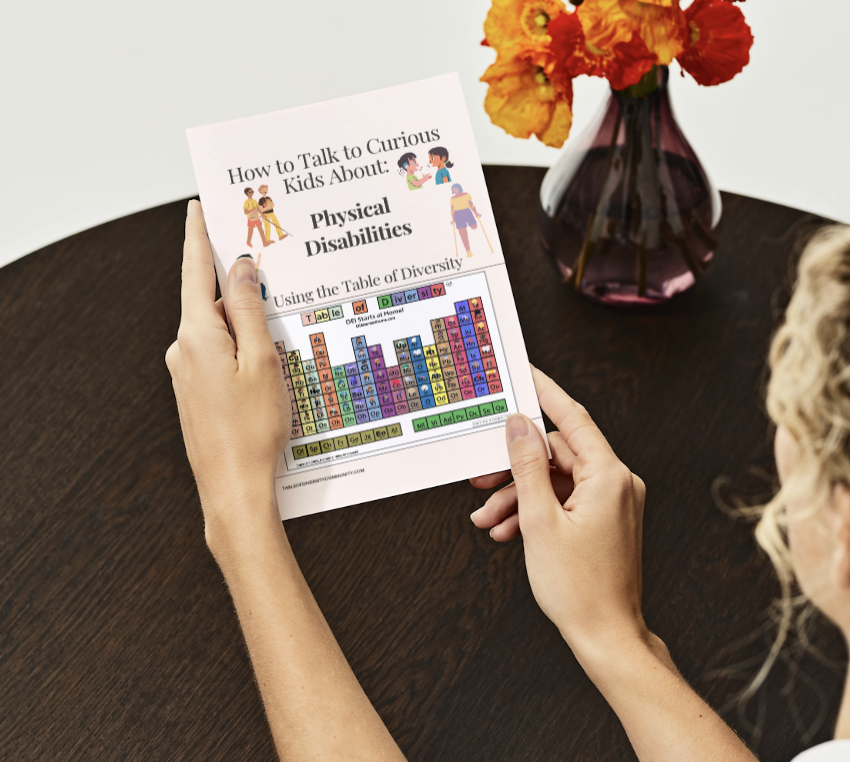 Image 2 of 2
This guide is designed for grown-ups and their curious kids, teens, and young adults to move through together — at your own pace, in your own space, on your own terms. The people, the history, and the systems that shaped who gets to move through the world freely, and who has had to fight for that right, are all here waiting for you.
And it arrives right at your door.
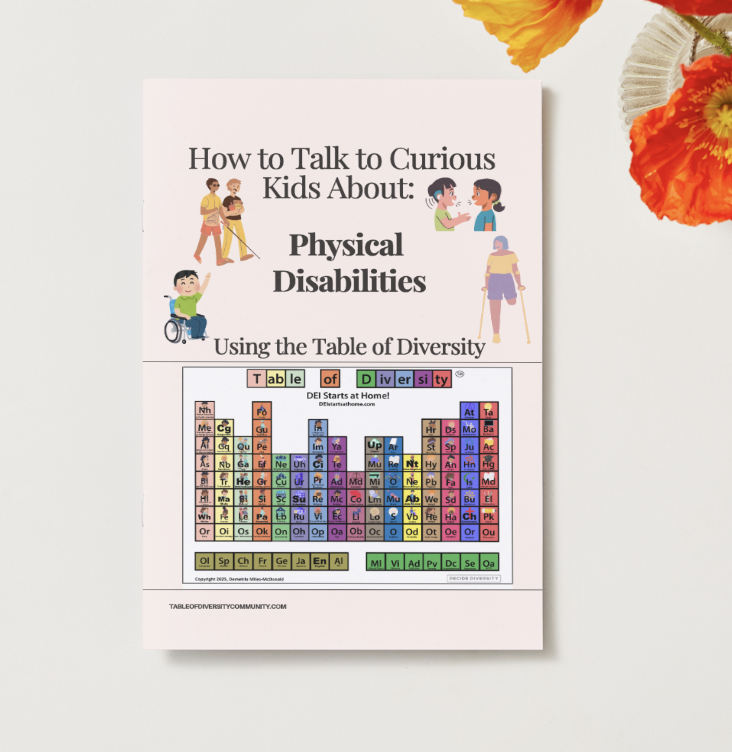
This is a physical guide — printed, mailed, and made to be held. No logging in. No scrolling. Just you, your people, and a conversation worth having at your kitchen table. The physical guide also includes a bonus item- a “Living It” reflection card from the Table of Diversity Deck for group activities and discussions.
When you finish this guide, something will be different. Your young person will see the world with new eyes — noticing what's accessible, who's included, and who's been left out. And you'll have the language, the confidence, and the tools to keep that conversation going long after the last page.
Inside this guide you'll find:
Find Out What They Know — a baseline that shows you exactly where to start
Physical Disabilities 101 — the facts, rooted in the ADA definition, at a 6th grade reading level
Learning Resources — curated tools to go deeper together
Conversation Starters — organized around identity, history, and community access
Family Activities — from puzzles and crafts to real-world exploration
Identity Compounds- for a more nuanced discussion that requires critical thinking
For Grown-Ups — before, during, and after support so you show up prepared, present, and reflective
Commit to Action — because conversation without action is just information
Your Lab Notebook — document what you discovered and build on it next year
This guide is anchored by the story of Judith Heumann, a disability rights activist whose life's work changed what access means in America. Her story is woven throughout every step.
Every page is rooted in the Table of Diversity™, a framework mapping 97+ identity elements across 18 categories. As you move through this guide, you'll see how identity, history, and belonging are always connected.
Where the practice of DEI meets its promise!
This guide is designed for grown-ups and their curious kids, teens, and young adults to move through together — at your own pace, in your own space, on your own terms. The people, the history, and the systems that shaped who gets to move through the world freely, and who has had to fight for that right, are all here waiting for you.
And it arrives right at your door.
This is a physical guide — printed, mailed, and made to be held. No logging in. No scrolling. Just you, your people, and a conversation worth having at your kitchen table. The physical guide also includes a bonus item- a “Living It” reflection card from the Table of Diversity Deck for group activities and discussions.
When you finish this guide, something will be different. Your young person will see the world with new eyes — noticing what's accessible, who's included, and who's been left out. And you'll have the language, the confidence, and the tools to keep that conversation going long after the last page.
Inside this guide you'll find:
Find Out What They Know — a baseline that shows you exactly where to start
Physical Disabilities 101 — the facts, rooted in the ADA definition, at a 6th grade reading level
Learning Resources — curated tools to go deeper together
Conversation Starters — organized around identity, history, and community access
Family Activities — from puzzles and crafts to real-world exploration
Identity Compounds- for a more nuanced discussion that requires critical thinking
For Grown-Ups — before, during, and after support so you show up prepared, present, and reflective
Commit to Action — because conversation without action is just information
Your Lab Notebook — document what you discovered and build on it next year
This guide is anchored by the story of Judith Heumann, a disability rights activist whose life's work changed what access means in America. Her story is woven throughout every step.
Every page is rooted in the Table of Diversity™, a framework mapping 97+ identity elements across 18 categories. As you move through this guide, you'll see how identity, history, and belonging are always connected.
Where the practice of DEI meets its promise!